New UN Report Reveals Depth of Tenure Security Crisis

Posted on March 13th, 2013 by admin

Raquel Rolnik, UN Special Rapporteur, has released a new report on tenure security that presents a framework for improving global housing security while outlining the challenges ahead. Rolnik was involved in the Mega-Cities Project in Sao Paulo since its inception. The report, entitled “Report of the Special Rapporteur on Adequate Housing as a Component of the Right to an Adequate Standard of Living, and on the right to Non-Discrimination in This Context” is available at http://direitoamoradia.org/?p=18863&lang=en

We are in the grip of a global tenure insecurity crisis. Access to secure housing and land is a prerequisite for human dignity and an adequate standard of living, yet many millions of people live under the daily threat of eviction.” – Rolnik

When are you secure in your home? Do you have to own it? What if you own it but have no government documents to prove it? What if somebody wants you off the land anyway? How about renting?

A new report from the United Nations documents the scale of tenure insecurity around the world. Tenure insecurity is the condition under which a person or family has reason to fear removal from their residence. The report, presented on March 4th by UN Special Rapporteur on Housing Raquel Rolnik demonstrates the myriad ways in which the “security, peace and dignity” of the urban poor are impeded by threats to their living situation.

Rolnik, whose mission is to document global issues concerning the right to adequate housing, has travelled the world conducting studies to develop the report. Stating the severity of the problem, she bluntly calls it a “global tenure insecurity crisis”. Every year the number of people with insecure tenure increases due to displacement. In 2011, over 40 million people around the world were displaced by conflicts or natural disasters. Others lose their security of tenure when they move from rural farmlands to informal housing arrangements in cities, either to seek employment or because of land speculation and large-scale acquisition of farmland. Forced evictions are the extreme manifestation of tenure insecurity and are the product of development, conflict, land grabbing and mega-events. “Single and older women, in particular, too often do not have the legal empowerment, education or financial resources to defend their tenure.”

While tenure insecurity is a global phenomenon, Rolnik stresses its variability. Different social, political and cultural contexts shape housing dynamics. For example while some cities only recognize titled property owners, others grant rights to squatters. Many cities deal with competing rights – like occupancy vs. ownership – and resolve them in a variety of ways. Legal and juridical approaches to land rights are so different around the world that even defining security of tenure is a hazardous task. Rolnik settles on a broad definition that is relevant to a diversity of housing contexts from the Favela residents of Brazil to conflict refugees in Sudan: “Security of tenure is understood…as tenure of land and/or housing which ensures a secure home and enables one to live in security, peace and dignity.”

After examining the variety of tenure arrangements, Rolnik came to a major flaw in the international response to the crisis. While on-the-ground realities of tenure security are diverse, the response has been too one-dimensional. She critiques UN-Habitat’s conception of tenure (which is shared by many governments) arguing that it is limiting to see “individual freehold” land rights as the ultimate form of secure tenure. According to Rolnick this legal model reflects the dominant market ideology and not necessarily the best way to offer security.

She suggests that in the future the goal of those looking to improve the lives of the vulnerable urban poor should be to transition them from tenure insecurity to security rather than from informality to formality. That would mean considering alternatives to individual freehold, such as collective tenure rights and “more flexible and expansive ways of recording and recognizing tenure forms and tenure rights.” She concludes that  there is “an obvious need” to develop a “more specific and comprehensive human rights guidance on security of tenure” that is applicable to the myriad legal and managerial systems around the world.

Rolnik’s conclusions challenge the dominant focus on formal property rights as a way to provide secure tenure. However, she can only cite a few examples of alternative rights arrangements and acknowledges that neoliberal economic policy has limited the response of most governments to untitled city dwellers. While the number of people lacking secure tenure is sure to rise, the report offers little hope that governments and trans-national institutions will get much better at helping them.

The report is also light on a point of major concern for the urban poor in the developing world. With sea levels projected to rise three feet in the next one hundred years and more frequent violent storms a certainty, many cities in vulnerable locations will face planning scenarios that could necessitate the depopulation of hazardous areas. Rolnik’s proposed comprehensive human rights approach will have to take into account situations where governments use coercive force to ensure the long-term safety of a climate-threatened neighborhood.

Who is Most at Risk from Sandy-like Storms?

Posted on February 21st, 2013 by admin

Ten Cities with the Largest Populations Threatened by Coastal Flooding

From: Ranking of the World’s Cities Most Exposed to Coastal Flooding Today and in the Future – OECD 2007. Available at: http://www.rms.com/publications/OECD_Cities_Coastal_Flooding.pdf


As New York City grapples with the aftermath of Superstorm Sandy, it is instructive to consider the situation of coastal cities around the world. New studies from leading climate scientists suggest that we can expect a three foot increase in global sea levels by the year 2100. Such growth will increase the frequency and violence of destructive coastal storms like Sandy.

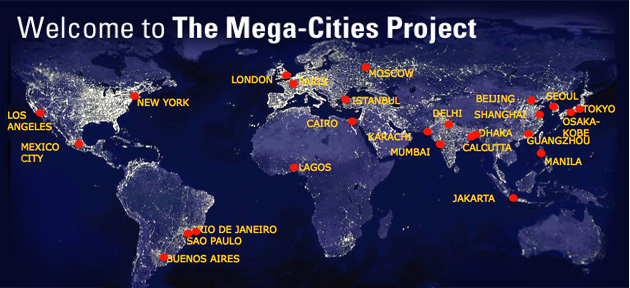
This chart, based on data from the OECD, shows that New York City is just one of many cities with a large population at risk from coastal storms. Numerous urban areas in India, Bangladesh and Southeast Asia have massive numbers of impoverished residents at or even below sea level. Unlike most New York City residents, these communities live in flimsy housing with little access to modernized rescue and evacuation services. Furthermore, because of projected ongoing urbanization and sea level rise, many of these cities will house much larger vulnerable populations in the decades to come. The OECD projects that cities like Dhaka will contain up to 11 times more at-risk residents by the year 2070.

This highlights the dual challenge facing coastal cities in the developing world: accommodating booming populations while adapting to rising sea levels and increasingly violent storms. The scale of the challenge demands innovative solutions rather than old answers.

View Barcelona Interview with Janice Perlman

Posted on January 9th, 2013 by admin

This is the FIRST public release of an interview I did at the WB Urban Research and Knowledge Symposium last Fall. It reflects our current thinking about the Mega-Cities Project next generation initiative, Mega-Cities/Mega-Change or MC2 –the energy of young people using new technologies to make a difference in cities. Click here to see the interview and hear the music.

Recent Talks by Janice Perlman

Posted on October 17th, 2012 by admin

In addition to my extensive participation at the Rio+20 Conference last June, over the 18 months I have been invited to give talks at many important venues and conferences addressing the concerns of the Mega-Cities project.  Fortunately, several of my talks have been recorded and are available in the public domain.

In August 2011, I was invited to be a Keynote Speaker at the EcoCities Conference in Montréal, Québec.  You can watch the talk I gave there, on August 23, 2011, here.

For a number of years, I have been a member of the jury for the Buckminster Fuller Challenge.  As the Buckminster Fuller Institute describes it, the Challenge awards $100,000 each year “to support the development and implementation of a strategy that has significant potential to solve humanity’s most pressing problems. Named “Socially-Responsible Design’s Highest Award” by Metropolis Magazine, it attracts bold, visionary, tangible initiatives focused on a well-defined need of critical importance. Winning solutions are regionally specific yet globally applicable and present a truly comprehensive, anticipatory, integrated approach to solving the world’s complex problems.” This year, alongside the other members of the jury, I participated in a Roundtable Discussion, which took place in Brooklyn, New York, on June 6, 2012. (Please note that this video is posted on Vimeo, which may require you to register before you can view it.  Registration is cost- and spam-free.)

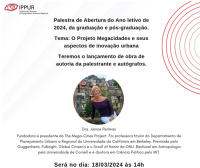
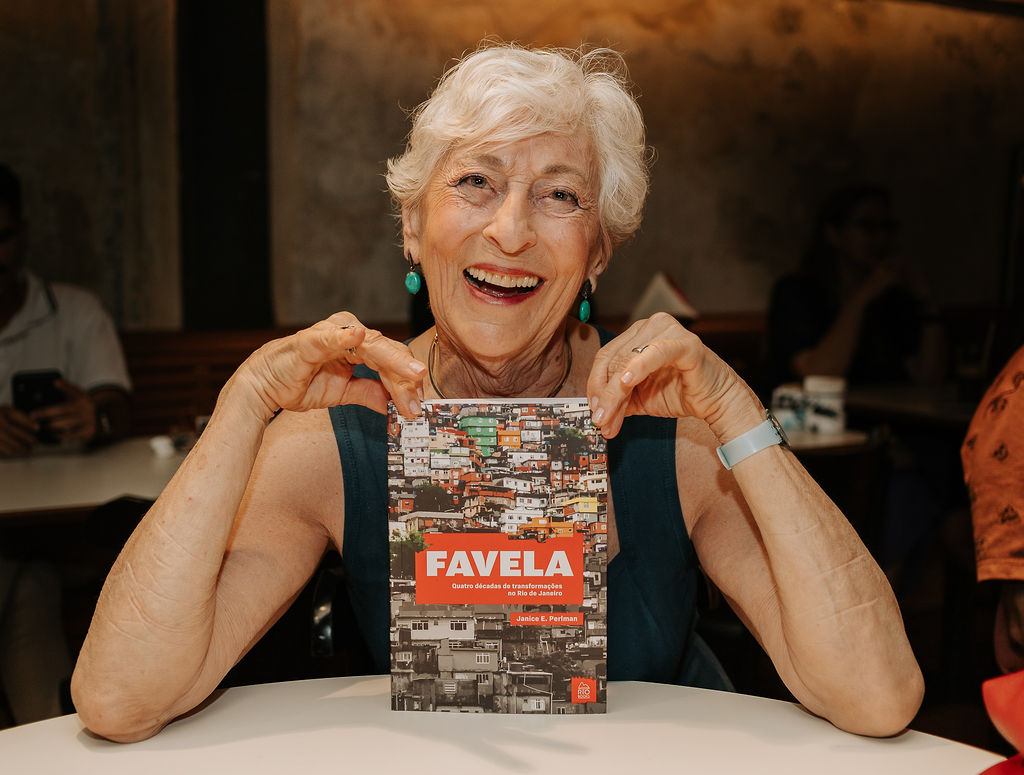
Last April, Rahul Mehrotra, Chair of the Department of Urban Planning and Design at Harvard University’s Graduate School of Design (Harvard’s Architecture School), and a long-time collaborator of the Mega-Cities Project, brought me to Cambridge to discuss my most recent book, Favela, with Harvard students and faculty. Click here to watch my talk at Harvard on April 18, 2012.

The Permaculture Project at Complexo do Alemão

Posted on September 5th, 2012 by admin

As I mentioned in my previous entry about Rio+20, filmmaker and environmental activist João Amorim has been working with the Botanical Garden of Brasília and with Rio NGO Verdejar to promote these organizations’ joint permaculture initiative at Complexo do Alemão in Rio.  As you will see in their report (RioPlus20RioPlusGreenEnglishPostRioSmall), the initiative is quite broad and involves a variety of efforts: the recycling of urban waste in an innovative way that turns waste into a water filtration system; the deployment of a solar water heating kit that produces hot water without the need for electricity or fuel, and using low-cost materials and simple techniques; and permaculture proper, involving the creation of a garden space where a variety of food crops are grown, complementing each other with respect to soil nutrients, shade, and physical support, and providing foodstuffs year-round.  Not only that, but the permaculture site at Morro do Alemão is strategically located with the intention of creating a transition zone between the dense space of the Complexo’s favelas and the area’s sole remaining natural space—the Serra da Misericórdia—hence helping preserve the Serra for its ecological value and especially as a natural park for the communities of the Complexo.

While Rio+20 was unfolding, João worked hard to bring to the permaculture site at the Complexo those of us coming from different corners of the world with an interest in this type of initiatives.  João and his collaborators from the Botanical Garden, Verdejar, Solarize (an NGO working on the solar water heating kit) and the local community spared no efforts to show us every element of the initiative and the context in which it is being developed—until very recently, one of Rio’s most violent favela areas, but also (in Nova Brasília, one of the Complexo’s favelas) one of the places where I lived during my fieldwork for The Myth of Marginality.  It was an unforgettable experience and an outstanding example of the ideas and practices that the Mega-Cities project is all about!

Janice at Rio+20: Global Encounter at the People’s Summit

Posted on August 21st, 2012 by admin

Some of the most interesting debates and events in connection with the Conference took place far from the official venue, at the Peoples’ Summit organized by NGOs in downtown Rio.  There, on June 21, 2012, I participated as part of a panel of guest speakers in the “Socio-Environmental Arena,” a space open to the public, as part of the Arena’s “Global Encounters,” on the topic of Sustainable and Accessible Cities.  The session is not available in full, but you can watch a short clip of one of my interventions, followed by an interview with me right after the event, by clicking on this link (from start to minute 2, in Portuguese only).

Janice at Rio+20: at the Corporate Sustainability Forum’s High Level Closing Plenary

Posted on August 21st, 2012 by admin

My second activity on June 18 took place once again under the auspices of the United Nations Compact Corporate Sustainability Forum, this time as a speaker at the Forum’s High Level Closing Plenary.  You can follow my talk here.

Janice at Rio+20: at the Sustainable Development Dialogues panel

Posted on August 21st, 2012 by admin

The Sustainable Development Dialogues were panels of renowned thought leaders from civil society, including the private sector, NGOs, and the scientific community, such as Gro Harlem Brundtland, Ignacy Sachs, Mary Robinson, and Muhammed Yunus. They were convened to engage in an open and action-oriented debate on key topics related to sustainable development. Three recommendations emanating from each of the Dialogues were conveyed directly to the Heads of State and Government present at the Summit.  I was invited to be part of the panel on Sustainable Cities and Innovation, which took place on June 18, along with other experts on urban issues:

-       Dr. Alejandro Aravena (Chile) – Architect, CEO, Elemental

-       Dr. Barry Bergdoll (United States of America) – Chief Curator, Architecture and Design, MoMA

-       Mr. David Cadman (Canada) – President, ICLEI

-       Dr. Enrique Ortiz (Mexico) – Former President, Habitat International Coalition

-       Mr. Jaime Lerner (Brazil) – President, Jaime Lerner Institute. Former Mayor of Curitiba and former Governor of Paraná State

-       Mr. Khalifa Sall (Senegal) – Mayor of Dakar and Vice-President of UCLG for Africa

-       Mr. Oded Grajew (Brazil) – President Emeritus, Ethos Institute

-       Ms. Nawal Al-Hosany (United Arab Emirates) – Director for Sustainability, Masdar

-       Dr. Shigeru Ban (Japan) – Architect, Shigeru Ban Architects

You can watch the entire session in three segments (Portuguese only): Part 1/3 (my intervention runs from minute 23 to the end of the segment), Part 2/3 (throughout), and Part 3/3 (throughout).

Janice at Rio+20: my talk at the Corporate Sustainability Forum

Posted on August 21st, 2012 by admin

My first public involvement with the Conference took place on June 16, 2012, when I was invited to speak at the Corporate Sustainability Forum in a session entitled “Collaboration and Innovation to Address Urban Poverty” organized by the U.N. Global Compact Cities and World Vision.  Click here to see my talk.

Janice at Rio+20-UPDATE

Posted on August 21st, 2012 by admin

As you are probably aware, the Rio+20 United Nations Conference on Sustainable Development was held in Rio de Janeiro from June 15 to 22, 2012. Marking the 20th anniversary of the first international conference on sustainable development held in Rio in 1992—in which I participated in my role as President and Founder of Mega Cities—Rio+20 convened heads of state, experts, and civil society to make further progress towards a world in which poverty is eliminated without destroying our natural environment.

I was thrilled to be invited to the Rio+20 Conference by the Brazilian State Department as a panelist in one of the ten Sustainable Development Dialogues (also called Thematic Dialogues) held in the four days leading up to the High Level Segment of the Conference. The Brazilian Government’s invitation, together with the generous support of my stay in Rio by the Mega-Cities Board of Directors, made it possible for me to participate in several events at the Conference sponsored by the Brazilian Government, the Association of Mayors, the United Nations Global Compact, and the People’s Summit of NGOs.

At the Conference, my interventions ranged from my research in Rio’s favelas over a period of 40 years, to my more recent work on Rio’s Pacifying Police Units and real estate prices in the city’s favelas, as well as the lessons from the urban innovations that the Mega-Cities Project has been identifying, disseminating and transferring over the past 25 years.

The greatest excitement was generated by our new initiative—making the transition to the next generation of innovative urban leaders using new technologies, not just to develop new approaches towards inclusive, sustainable cities, but also for sharing those approaches. We call this initiative Mega-Cities/Mega/Change or MC2 which, as Einstein showed, is pure energy!! Our idea is to create a circle of mentors among the original Mega-Cities partners in cities around the world, who will identify and support the most promising young leaders in research, advocacy, policy and practice in each city. We will then create a “cloud of trust” network among these young people to carry the project forward. In fact, two people from MC2 were already present at Rio+20 with me, Carlos Rufin and Michael Donovan. Watch for their posts here in the next few days.

Another highlight of the Conference was the Equator Prize 2012 Award Ceremony, held on June 20. The Equator Initiative, which celebrated its 10-year anniversary at the Ceremony, brings together the United Nations, governments, civil society, businesses and grassroots organizations to recognize and advance local sustainable development solutions for people, nature and resilient communities. The Equator Prize recognizes 25 outstanding local initiatives every year that are working to advance these goals. Each of the 25 recipients received $5,000 (USD), with 10 selected for special recognition and a total of $20,000 (USD).

Film-maker João Amorim took several of us far away from the official venues of the Conference to what was until recently one of Rio’s most violent favela districts, the Complexo do Alemão, to show us the Pilot Permaculture Project he is spearheading together with volunteers from the Brasilia Botanical Garden and local NGO Verdejar. This tremendously exciting initiative is not only helping keep the only nature preserve in the immense Complexo for its residents to enjoy, but also showing them how to reuse rubble and other refuse to filter water and grow urban food gardens.  You can learn more about it in a film produced by João available here, and in Jeff Tollefson’s posting in the blog of the prestigious journal Nature.

I was also inspired by a unique exhibition on Sustainable Development organized as part of the Conference at Rio’s Forte de Copacabana, and by the response of the people of Rio to the exhibition. In a very unequal city like Rio, where the better off always find or buy privileged access to the city’s events, the exhibition was not only free, but people from every social class waited together on five-hour lines to see it and show it to their children.

From my point of view, the official meeting was a disappointment—not that I had high hopes for it. Unfortunately, the governments present at the Conference failed to realize the vision of UN Secretary-General Ban Ki-moon on the “need to invent a new model – a model that offers growth and social inclusion – a model that is more respectful of the planet’s finite resources.” But the other events were inspirational and exciting, and many new connections were made.